
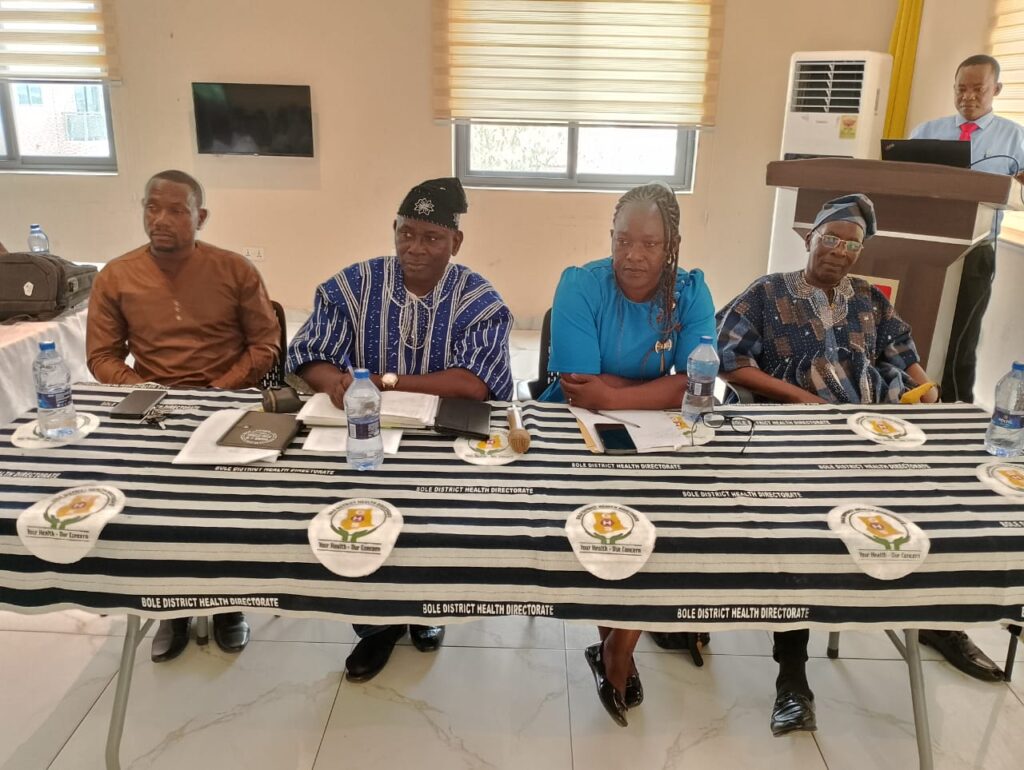
The Bole District Health Directorate in the Savannah Region has held its Annual Performance Review Meeting to assess the health sector’s achievements and challenges for the year 2025.
Speaking at the meeting, the Bole District Health Director, Mr. Daniel Dindiok Dubik said the review forms part of the Ghana Health Service’s commitment to accountability and improved service delivery to stakeholders in the district.
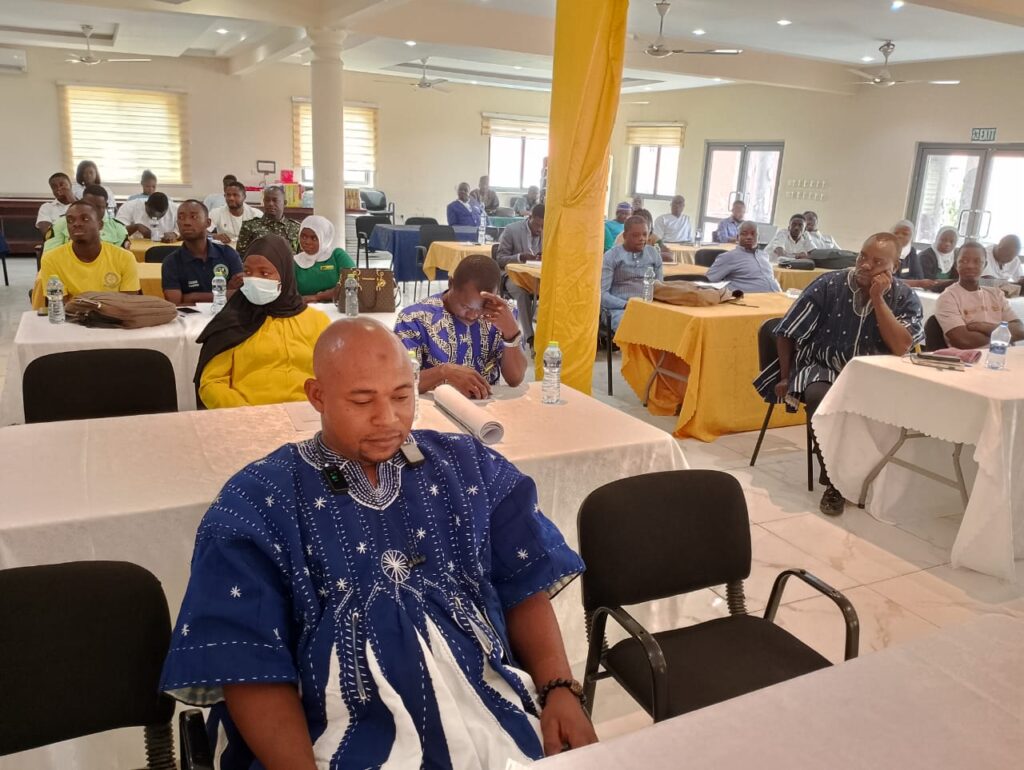
The event brought together representatives of the District Chief Executive, heads of departments, security service commanders, media representatives, and heads of various health facilities across the district.
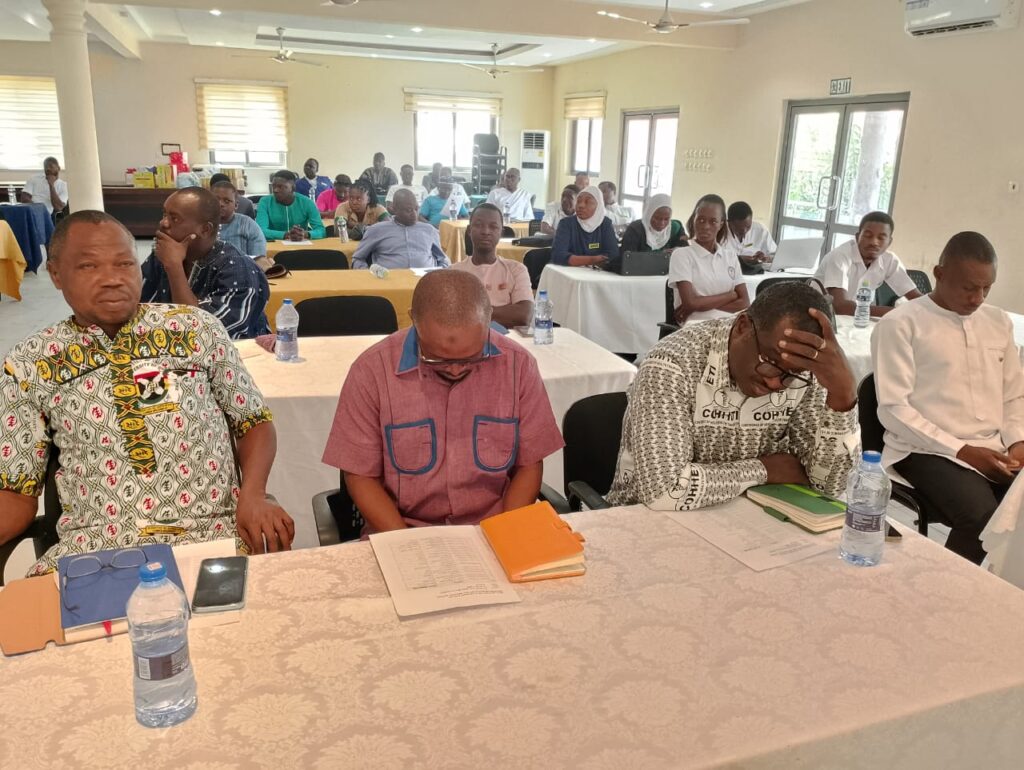
Mr. Dubik explained that the performance review process began at the health facility level, progressed through the sub-districts, and culminated in the district-level review meeting. According to him, the exercise provides an opportunity for health authorities and stakeholders to reflect on the past year, assess achievements, identify gaps, and adopt new strategies to improve service delivery.
He noted that the year 2025 began with several challenges including inadequate health infrastructure, shortage of equipment, irregular supply of drugs and medical consumables, inadequate transport for health services, and increasing disease burden.
Despite these challenges, Mr. Dubik indicated that the district recorded improvements in several key health indicators, particularly in maternal, neonatal and child health services.
According to him, neonatal care coverage increased from 124.6 percent in 2024 to 143 percent in 2025. Skilled delivery also improved from 87.5 percent to 96.1 percent within the same period.
He further disclosed that the district made significant progress in reducing maternal deaths. The maternal mortality ratio dropped drastically from 156.83 per 100,000 live births in 2024 to 19.68 per 100,000 live births in 2025.
On tuberculosis control, the district also saw improvement, with TB case notifications rising by nearly 10 percent from 58 to 67.1. Additionally, malaria mortality and surgical site infection rates have remained at zero for the past two years.
However, the Health Director acknowledged that some indicators either stagnated or fell below national targets. For instance, the proportion of pregnant women making at least four antenatal care visits remained at about 50.4 percent.
He also raised concerns about inequitable distribution of health professionals across the district, noting that some communities still struggle to access basic healthcare services.
Mr. Dubik stressed that access to quality healthcare is a fundamental right of every Ghanaian and called for deliberate efforts to ensure health workers are fairly distributed across communities to help achieve Universal Health Coverage by 2030.
He further highlighted major operational challenges facing the district health directorate, including inadequate office space, old vehicles, and deteriorating Community-based Health Planning and Services (CHPS) compounds that require urgent renovation and expansion.
Mr. Dubik appealed to stakeholders and government to support efforts to improve health infrastructure and logistics in the district.
He also took the opportunity to acknowledge the contributions of his predecessor and staff of the health directorate for their dedication to improving healthcare delivery in the district.
The Annual Performance Review Meeting is a key platform used by the Ghana Health Service to evaluate progress and plan strategies for improved healthcare delivery in districts across the country.
Source: nkilgifm.com
