
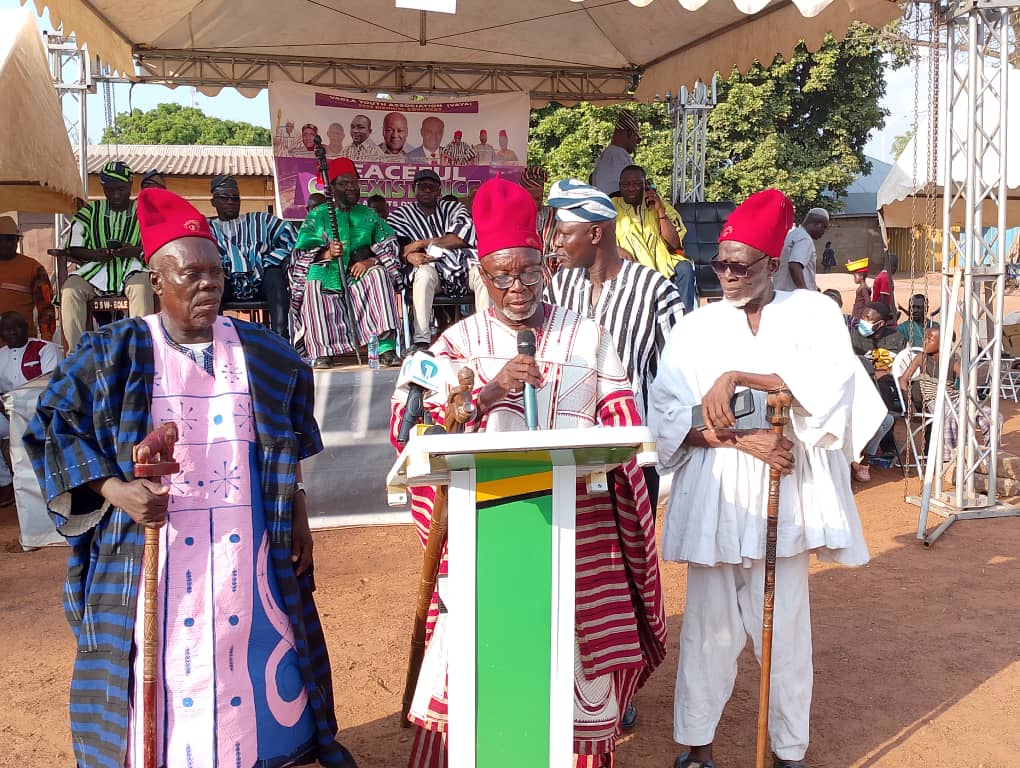
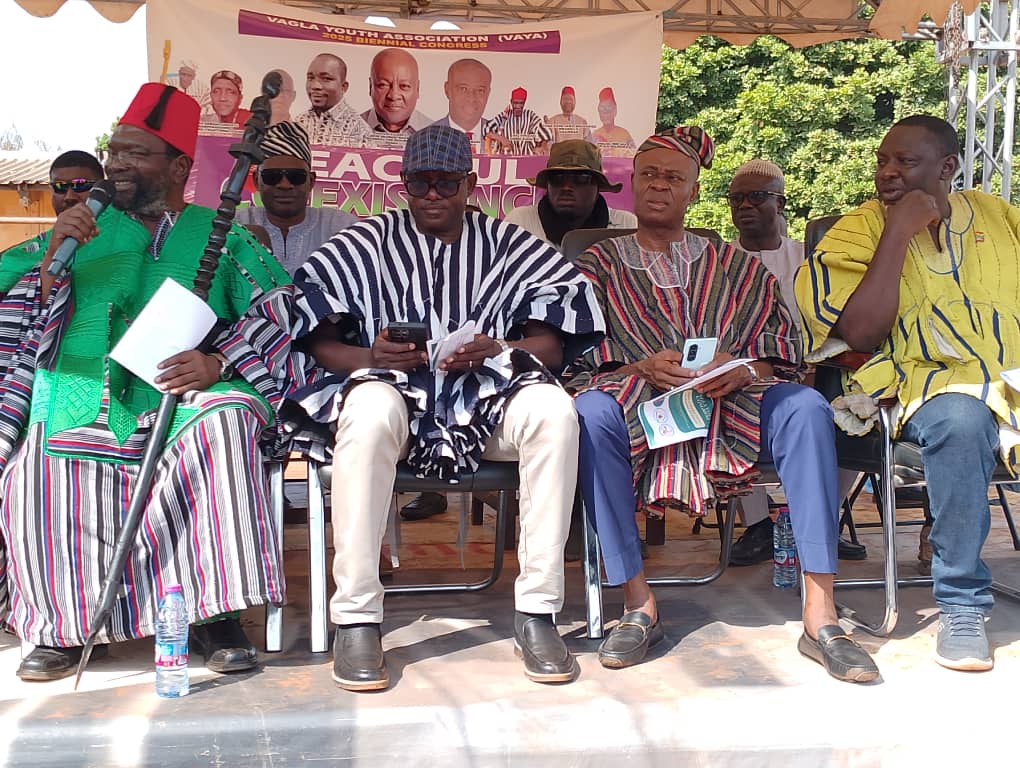
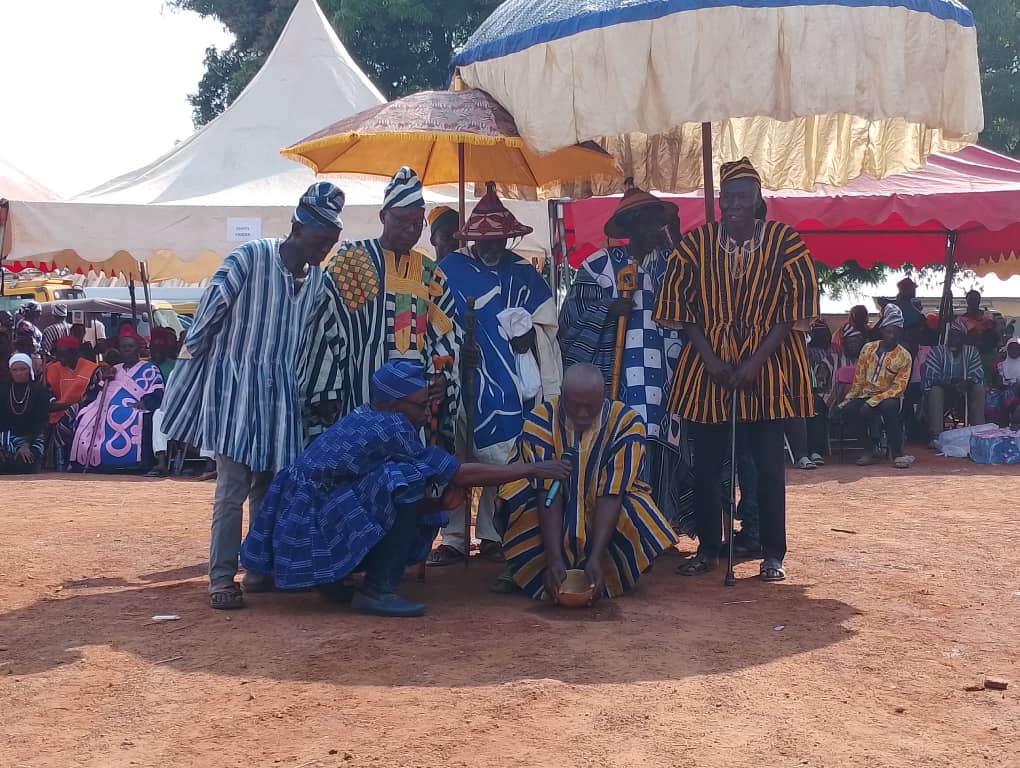
The Vagla Youth Association (VAYA) has successfully held its Biennial National Congress at the ancient Vagla town of Beel in Bole, bringing together traditional rulers, youth groups, politicians and allied ethnic communities from across the Savannah Region.
The congress, held under the theme “Peaceful Co-existence: Youth as Agents of Development,” marked a significant milestone in the history of the Vagla, Safalba, Choruba and Nomee/Batigee indigenous groups, particularly within the Bole and Sawla-Tuna-Kalba districts on December 30, 2025Addressing the gathering, the VAYA national association’s president, Mr. Jacob Kuubu Ahia emphasized the need for unity, peace and collaboration among the various ethnic groups in the region.
The congress acknowledged the shared ancestral ties between the Vagla people and other communities including the Sissala, Mo (North and South), Kasena, Tampulma, Chakala and Ngbanya, calling on all to strengthen peaceful relations and mutual respect.
He noted that the Savannah Region is currently enjoying relative calm and urged the youth to take advantage of the peace to drive development, saying poverty is the region’s common enemy and charged young people to be proactive in promoting social cohesion, economic empowerment and community development.
Politically, the congress expressed appreciation for the leadership of His Excellency President John Dramani Mahama, describing him as a source of pride to the people and pledged its support for government policies and appealed for inclusive development that addresses the needs of Vagla communities.
The association reiterated its openness to working with all recognised political parties, encouraging the youth to be politically active rather than passive.On traditional governance, the congress called on Vagla chiefs, through the Heuhina Koora/Tindana Council, to maintain strong ties with neighbouring traditional councils, particularly those of the Sissala, Mo, Kasena and the Gonja/Bole Traditional Council.
Participants were urged to focus on shared values and interests while avoiding divisions that could undermine peace.The relevance of the biennial congress was highlighted as a platform for unity in diversity, cultural exchange, resource mobilisation and political engagement.
It also served as an avenue to advocate for educational advancement, with particular emphasis on technical and vocational training as a pathway to youth employment and development.The congress concluded with a renewed commitment by the youth to champion peace, unity and development across the Savannah Region.
In a speech read by his secretary, Mr. Abdulai Haruna, the Paramount Chief and Overlord of the Bole Traditional Area, Bolewura Sarfo Kutuge Feso I, has called on the youth to embrace peaceful coexistence as a foundation for development, urging government and stakeholders to invest more in youth empowerment and peacebuilding.
The Bolewura welcomed participants from across the country and expressed gratitude for their solidarity. He noted that although the congress is traditionally a joyous occasion, held amid recent disturbances in parts of the Bole Traditional Area, which have tested the unity of the kingdom.
Speaking on the theme “Peaceful Co-existence: Youth Agents of Development,” the Paramount Chief stressed that peace remains the most critical prerequisite for social, political and economic development.
He condemned violence in all forms, describing it as counterproductive to progress, and urged mutual respect, tolerance and dialogue among diverse groups.Bolewura Sarfo Kutuge Feso I highlighted the historical role of traditional governance in maintaining peace and called for stronger collaboration among chiefs, religious leaders, youth groups and government agencies in conflict prevention.
He emphasized youth peace education, non-violent conflict resolution and respect for citizens rights as key strategies for sustaining harmony.The Paramount Chief also raised concerns about youth unemployment, warning that it poses a threat to national security.
He appealed to President John Dramani Mahama to consider mass recruitment of qualified youth into the Ghana Armed Forces and other security services as part of efforts to reduce vulnerability to conflict.
He concluded by reaffirming that the youth are agents of change and the driving force of national development, calling on parents, society and government to collectively create opportunities that harness youthful energy for peace and progress.He ended with goodwill messages for the Bole Traditional Area, the Vagla Youth Association and the Gonja Kingdom.
