
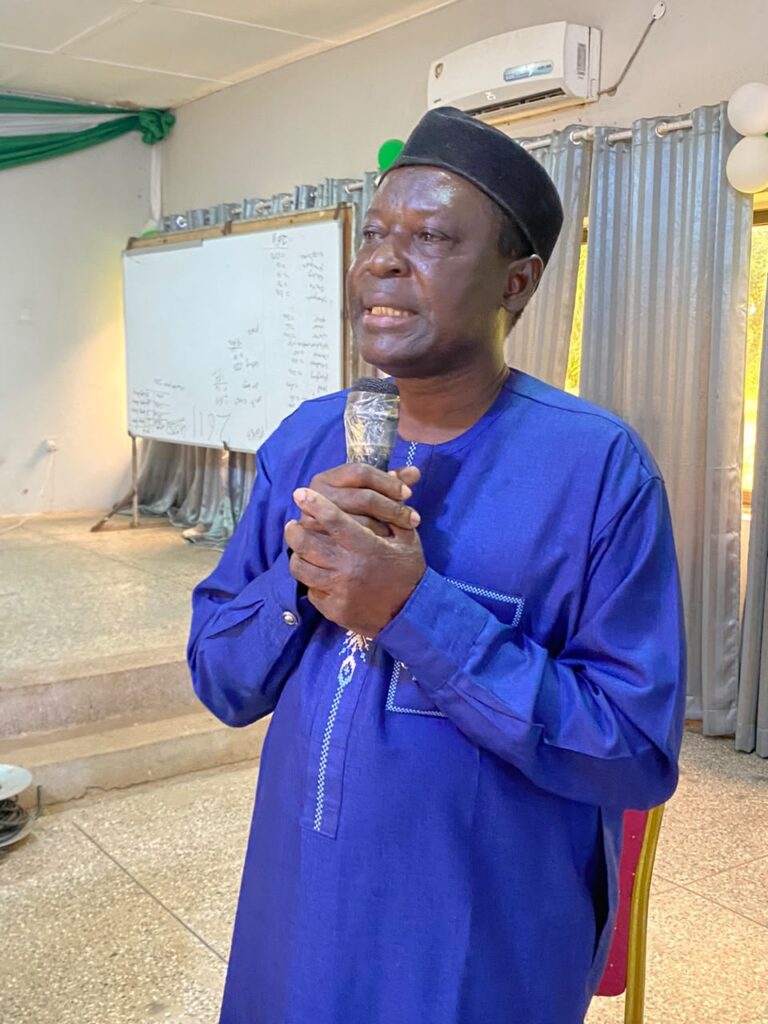
The Savannah Regional Director of Agriculture, Mr. Seidu Sulemana has called for the establishment of a dedicated seed processing unit in the Savannah Region to support local seed producers and reduce the challenges associated with transporting seeds to the Northern Region for processing.
Speaking at a stakeholders’ engagement meeting with the National Seed Council in Damongo, Mr. Sulemana said the absence of a seed processing facility remained one of the major constraints confronting seed production and distribution in the region.
He explained that although seed production in the Savannah Region was still developing following its separation from the former Northern Region, the region had begun registering its own seed producers.
According to him, the vast geographical spread of the region, which includes farming communities across Salaga, Bole, Sawla and other areas, made the lack of a local processing facility particularly burdensome.
“Savannah Region is so vast, and our farmers are actively engaged in production, but the lack of a local processing facility remains one of our biggest challenges,” he said.
Mr. Sulemana noted that farmers and seed producers were currently compelled to transport seeds to Tamale for processing before bringing them back to the region, a situation he described as costly and inefficient.
He therefore appealed to the National Seed Council and other stakeholders to consider establishing a seed processing facility in the Savannah Region to strengthen the seed value chain and improve access to quality seeds.
The Regional Director also observed that seed production in the region was still below its potential, despite the high level of crop production.
He said farmers had previously relied heavily on saved seeds due to the high cost of certified seeds, which negatively affected productivity. However, he noted that government interventions, including the subsidisation of agricultural inputs and improved extension services, had gradually encouraged farmers to adopt certified seeds.
“We are now very confident that the market is there, and farmers are increasingly patronising certified seed,” he said, stressing the need to expand local seed production and processing capacity to meet growing demand.
Mr. Sulemana further raised concerns over the sale and use of unapproved seed varieties and agrochemicals in some parts of the region, urging the National Seed Council and the Plant Protection and Regulatory Services Directorate (PPRSD) to intensify regulatory oversight.
He cited concerns over a maize variety locally referred to as “Condemn,” which, according to him, was being used by some farmers in combination with glyphosate for weed control.
He warned that excessive and repeated use of herbicides could have serious long-term consequences for soil health and called for greater scrutiny of agrochemicals being marketed to farmers.
“The long-term effects are not being adequately considered,” he cautioned, stressing the need for farmers and agrochemical dealers to be properly educated on active ingredients, correct application methods and potential environmental impacts.
He said the issue was particularly important in the Savannah Region due to the high cost of farm labour, which had led many farmers to rely heavily on chemical weed control from planting through to harvest.
Mr. Sulemana therefore appealed to stakeholders to strengthen education and monitoring of agrochemical dealers and farmers to ensure that only approved and properly regulated products were used.
He also urged the Seed Council to pay greater attention to the suitability of seed varieties for different ecological zones, particularly in the context of climate change.
According to him, while some seed varieties performed well in the region, others were less suited to prevailing climatic and environmental conditions.
He called for enhanced research and collaboration among relevant institutions to identify and promote varieties that are resilient to climate change while delivering higher yields.
The Regional Director also raised concerns about the high cost of hybrid seeds, which he said was discouraging some farmers from adopting improved planting materials.
He appealed for efforts to develop and produce locally adapted hybrid seeds at more affordable prices, arguing that such an intervention would improve access to quality inputs, boost productivity and reduce dependence on expensive imported varieties.
Mr. Sulemana expressed appreciation to the National Seed Council, PPRSD officials, coordinators, members of the Savannah Accelerated Development and Growth Programme (SADEP), farmers and other stakeholders for participating in the engagement.
He said the Regional Coordinating Council remained committed to collaborating with relevant institutions to address challenges in the seed sector and enhance agricultural productivity in the Savannah Region.
Source: nkilgifm.com
