
“
The Lobi/Brifor Council of Elders in Ghana have cautioned Joseph Wereh, a journalist and executive member of the Brifor Youth Association against speaking on behalf of the ethnic group without its mandate.
The Council made its position clear, insisting that Mr. Wereh does not have the authority to represent or speak for the Lobi/Brifor community on matters concerning the group.
The elders’ position follows concerns over statements allegedly attributed to Mr. Wereh, which they say do not represent the official position of the Council.
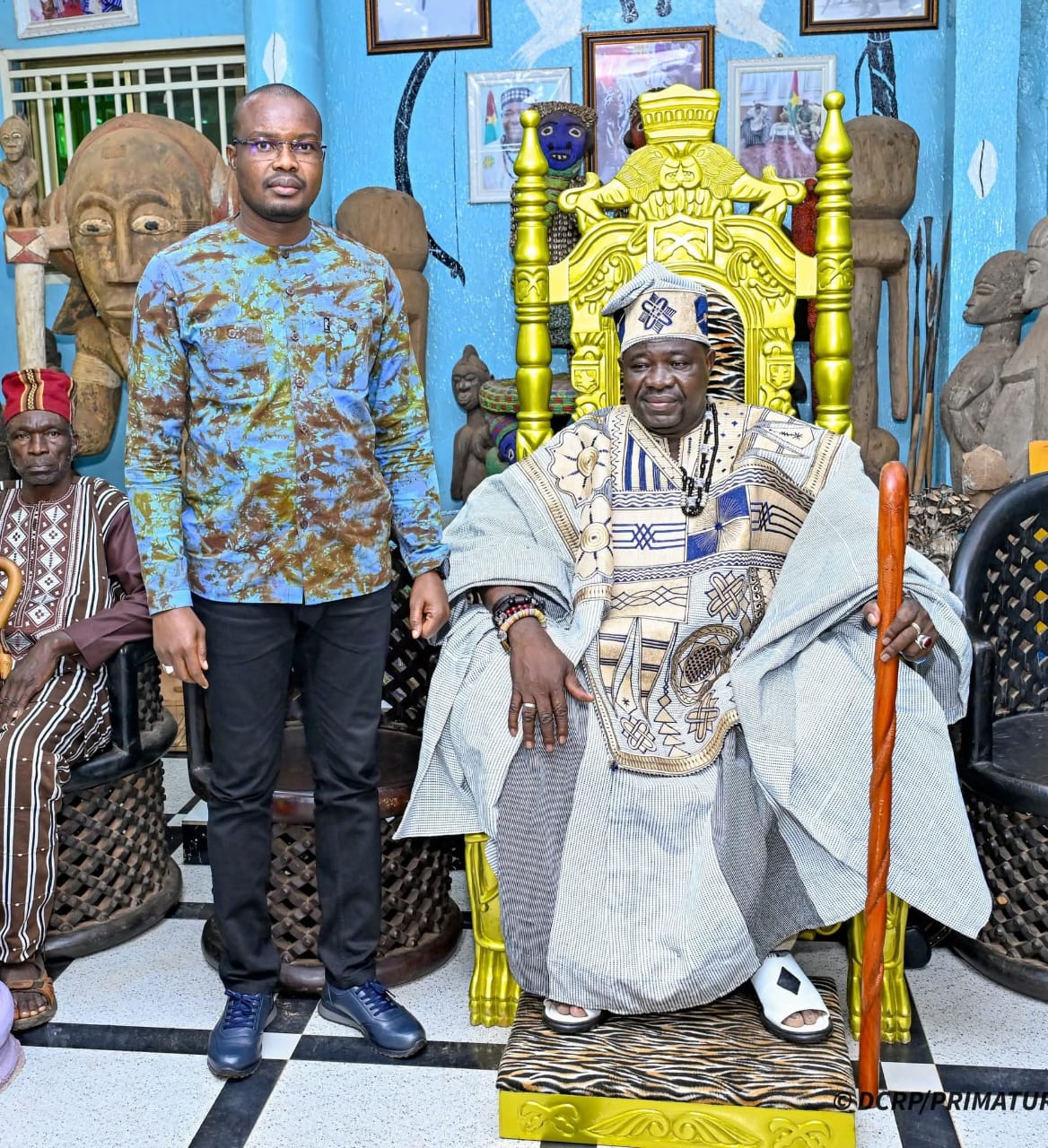
The Lobi/ Brifor Council of Elders said they read an open letter from Joseph Wereh to His Majesty Naa Bifaté II, Chief of Canton of
Gaoua, Burkina Faso, and must respectfully state that they strongly disagree with both its tone
and its underlying message.
A press statement signed by Thomas Boadi Soyori, the Secretary of the group on 11th September, 2026 said; “In our view, the letter is unfortunate, ill-timed and potentially damaging to the delicate peace,
reconciliation and relationship- building efforts currently taking place among our people and our neighbours”.
Joseph Wereh a former presenter of Bole Yagbon Radio in an open letter to His Majesty Naa Bifate II, the Chief of Canton of Gaoua in Burkina Faso and among many issues stated that; “I, together with many other Birifors in Ghana, have not been entirely happy with the manner in which you have been moving in and out of Ghana, particularly in relation to your own people, Chief”
Joseph Wereh wrote; “This month, September, marks exactly one year since you came to Ghana to celebrate Damba with your friend and colleague Chief of the Kong Traditional Area”.
He added; “You arrived at a time when your people in Ghana were going through difficult moments, yet your visit appeared to be primarily about celebration, as though nothing significant was happening to your people.
Joseph Wereh added that;
“Your Majesty, I do not know what you have discussed beyond your personal relationship with your colleague King and friend, the Kongwura. But one thing I know is that your people in Ghana did not have freedom (traditionally, socially, economically and Politically)”.
He also wrote;
“I am not sure we have had the opportunity to sit down together as a tribe from Ghana and you genuinely listen to us—to understand our difficulties, frustrations and concerns”.
Joseph Wereh added that;
“One of our challenges, for instance, is the absence of a central traditional leader whom you can easily engage whenever you visit Ghana, partly I believe it’s the reason when you visit, it’s difficult to have us together. And I ask: Do you honestly think Birifors in Ghana do not want to have a centralised traditional leadership?”.
He further said;
“For crying out loud, we are the second-largest ethnic group in the Region. I am certain that where you come from, there are chiefs representing different ethnic groups on the same land. We were told if they give us the chance we will take their land. Having a Chief does not necessarily mean fighting for ownership of land. It cannot even be true because We have seen Fulanis, and other ethnic groups established traditional leadership structures in the Savannah Region”.
Joseph Wereh said;
“I understand that when you got to Sawla, you went on radio. One of the things attributed to you allegedly was that, Birifors are on social media insulting Gonjas.
My King, again, I do not want to believe that those were your exact words. If they were, however, one may ask: What specific insults were being referred to?
Did the person who fed you with this information also follow what has been said about Birifors on social media? Because, from what I know, many Birifor youth only respond after misleading or provocative narratives about Birifors have been circulated”.
But the Lobi/ Brifor Council of Elders stated; “First and foremost, we find it difficult to understand the basis upon which Wereh assumes the authority to speak on behalf of all Birifors in Ghana”.
They added that the Birifor community is made up of many
respected elders, professionals, opinion leaders, youth leaders and public servants and that no individual
can claim exclusive ownership of the voice, aspirations or grievances of an entire people.
Lobi/ Brifor Council of Elders said; “We are particularly befuddled by the suggestion that Naa Bifaté II is disconnected from his people
in Ghana or that he has failed to appreciate their concerns. During his visits to Ghana, His Majesty
has not confined his engagements to the Gonja community or group; indeed, he also visited
Kporiju, where he interacted with his people and community members.
They added that distinguished Lobi leaders,
including Hon. Matthew Chochitey and other respected personalities, have likewise had direct
engagements with His Majesty.
The Lobi/ Brifor Council of Elders said, “Are we to conclude that these leaders, together with the people of
Kporiju who welcomed and interacted with him, are less Birifor than Joseph Wereh? Certainly
not”.
The group said; “The facts surrounding Naa Bifaté II’s recent visit to Ghana further expose the weakness of the
narrative being advanced by Mr. Wereh”.
They added that contrary to the impression created in his letter, members
of the Lobi/Birifor community were informed of His Majesty’s visit and actively participated in
welcoming and hosting him and that through the efforts of Hon. Matthew Chochitey, the Lobi/Birifor the Council of Elders mobilised members of the community to receive the King and presented him with a token of One Thousand Ghana Cedis for water as a traditional gesture of welcome.
The Lobi/ Brifor Council of Elders also said; “On the
Damba festival day, Council members accompanied Naa Bifaté II to Kong, where they were
received in the Kongwura’s Great Hall before joining other chiefs and dignitaries at the festival grounds”.
They added; “In addition, the Member of Parliament for Sawla-Tuna-Kalba, Hon. Andrews Chiwitey Dari, hosted a dinner in honour of the King and his entourage. Hon. Matthew Chochitey and Mr.
Thomas Maal-eon, aide to the Member of Parliament, also accompanied Naa Bifaté II and the
Kongwura on a courtesy call to the revered Buipewura”.
Lobi/ Brifor Council of Elders stated; “Furthermore, the Chairman of the Council,
Mr Thomas Bebeh Sennor, personally facilitated a radio engagement for the King, enabling him to address not only the Lobi/Birifor community but the entire people of Sawla-Tuna-Kalba”.
The group said; “These are not the actions of a community that was ignored, excluded or denied access to its King. Rather, they demonstrate that meaningful engagement took place and that recognised community leaders and institutions were actively involved throughout the visit.
The Lobi/ Brifor Council of Elders said; “The fact that respected community leaders have met and interacted with Naa Bifaté II demonstrates
that there are legitimate channels through which concerns can be conveyed”.
The group said; “It is therefore unfair
and presumptuous for Joseph Wereh to suggest that he alone understands the concerns of Birifors or that he alone can communicate them to our King”.
Lobi/ Brifor Council of Elders added that; “What concerns us most is the attempt to portray every effort at friendship, diplomacy and
engagement between Naa Bifaté II and traditional authorities in Ghana as some form of betrayal of Birifor interests”.
They said such a narrative is dangerous because peace is built through dialogue, engagement and
relationship-building, not through suspicion and division.
The Lobi/ Brifor Council of Elders also said at a time when community leaders, traditional authorities and peace actors are working tirelessly
to heal wounds, reduce tensions and promote coexistence, statements that encourage mistrust are
unhelpful and risk undermining the progress that has been made.
They added that; “We also believe it is inappropriate to suggest that there is ‘nothing to celebrate’ with those whom
he considers opponents.
The Lobi/ Brifor Council of Elders said history has repeatedly shown that sustainable peace is achieved when people choose engagement over hostility and dialogue over confrontation.
The group said; “Indeed, our own
traditions teach us this lesson. We are told that in the olden days, whenever Lobi warriors found
themselves on the battlefield against their foes, popularly known as ‘tanguon’, and felt the need
for tobacco, they could ask for it and it would be given to them even by the enemy.
The Lobi/ Brifor Council of Elders said; “We are also
told that when one consoles a bereaved enemy, it marks the beginning of reconciliation”.
They added that; “These enduring values remind us that even in moments of disagreement or conflict, humanity, respect and dialogue must prevail. It is therefore neither strange nor objectionable for leaders and communities to maintain cordial relations and celebrate occasions that create opportunities for
understanding, healing and peaceful coexistence”.
The Lobi/ Brifor Council of Elders added that; “If genuine concerns exist within the Lobi/Birifor community, they should be articulated through
respectful engagement and constructive dialogue:.
The group said; “We should not seek to create the impression that
everyone who pursues peace, friendship and cooperation has abandoned the interests of our people”.
The Lobi/ Brifor Council of Elders, “Our appeal to Mr. Joseph Wereh is simple: let us be careful with our words. We are dealing with
sensitive matters affecting real communities and real lives. We must avoid statements that deepen divisions or create unnecessary tensions where efforts are being made to build understanding”.
Source: nkilgifm.com
