
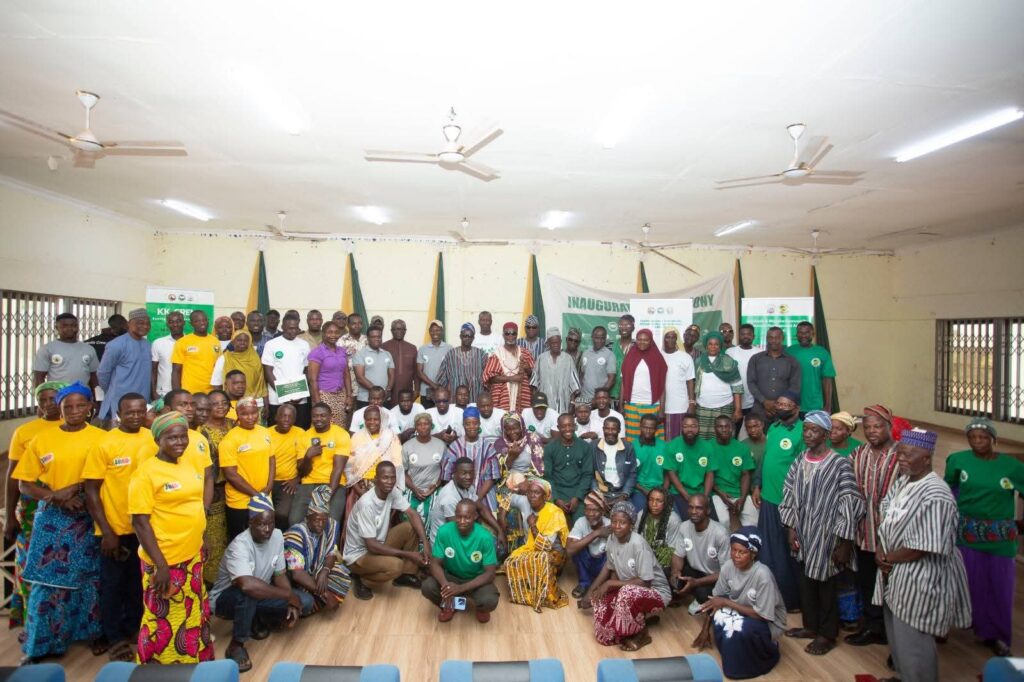
Four Community Resource Management Areas (CREMAs) within the Mole National Park ecological landscape have been successfully inaugurated in a historic ceremony aimed at strengthening community participation in wildlife conservation and sustainable natural resource management.
The inauguration, held on March 11, 2026, marked a significant milestone in Ghana’s efforts to promote community-based environmental governance. During the ceremony, devolution certificates were presented to the four newly established CREMAs — Sojakoda, Mayaba, KK and Kapite Nabonse, formally granting participating communities the authority to manage and protect their natural resources.
The Community Resource Management Area (CREMA) concept in Ghana is a community-based strategy developed by the Wildlife Division of the Forestry Commission to promote collaborative wildlife and natural resource management.
The initiative represents a shift from a centralized, top-down conservation approach to one that empowers local communities to take responsibility for protecting wildlife, forests and other ecological resources.
The Savannah Regional Minister, Salisu Be-Awurbi, who addressed the gathering, commended the establishment of the CREMAs and called for the initiative to be expanded to more districts in the region.
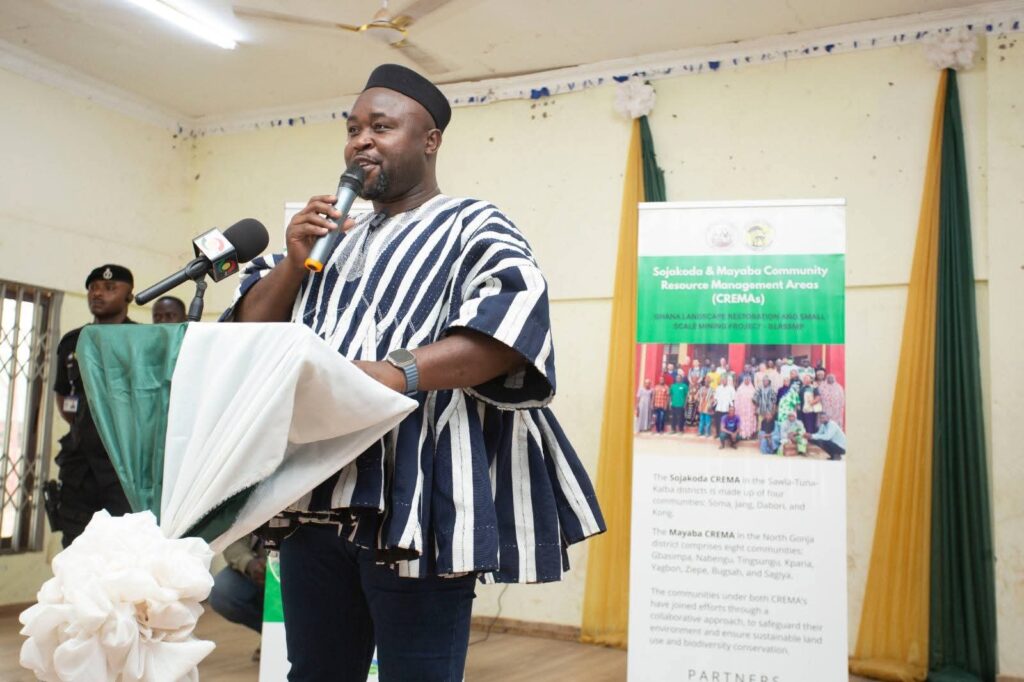
According to him, extending the CREMA concept to the Central Gonja, Bole and Eastern Gonja districts will allow more communities to actively participate in environmental protection and sustainable natural resource management.
He explained that CREMAs provide a structured and legally recognized framework for communities to restore degraded lands, protect shea landscapes and forest reserves, combat illegal logging and unsustainable mining activities, and develop alternative livelihood opportunities.
Mr. Be-Awurbi stressed that the long-term success of the CREMAs will depend on transparency, accountability and unity among members, urging the leadership of the various CREMAs to work closely with community stakeholders to ensure effective management of natural resources.
He also assured that the Savannah Regional Coordinating Council will continue to collaborate with the Forestry Commission of Ghana and district assemblies to support the initiative. The minister further appealed to authorities to consider employing local youth in conservation and park management activities.
The Regional Manager of the Wildlife Division, Moses Anongura, explained that the ceremony was organized to officially inaugurate the four CREMAs and formally hand over management authority to the communities through the devolution certificates.
He noted that the CREMA framework was introduced in Ghana around the year 2000 to encourage community participation in wildlife conservation and natural resource management. Mr. Anongura added that the concept has gained stronger legal backing following the passage of the Wildlife Resources Management Act, 2023, which formally recognizes and strengthens the CREMA system under Ghanaian law.
The Municipal Chief Executive for West Gonja Municipality, Yakubu Yussif Castro, described the inauguration as a major milestone for the districts involved.
He stated that the CREMA initiative demonstrates a shared commitment to sustainable resource management and community-driven conservation. According to him, forests, wildlife, water bodies and fertile lands remain vital resources supporting the local economy and ecological balance, but are increasingly threatened by illegal activities and human pressure.
He also highlighted the tourism potential of the municipality, noting that its peaceful environment makes it suitable for conservation initiatives and nature-based tourism.
The King and Overlord of the Gonja Kingdom, Yagbonwura Bii-Kunuto Jewu Soale I, represented by Chief Kulasewura Sakara, urged the communities involved to treat the CREMAs as symbols of unity and responsibility.
He called on traditional leaders, committee members, youth and women to work together with transparency and fairness to ensure the long-term success of the initiative.
Acting Executive Director and Board Member of the Ghana Wildlife Society, Professor Erasmus Owusu, commended stakeholders for their commitment to conservation and pledged continued support for the CREMA initiative.
Chairperson of the programme, Chief Abdallah Ahmed Tolodompewura, also encouraged members of the CREMAs to remain dedicated to their responsibilities and avoid using their leadership positions for personal financial gain.
The Savannah Regional Minister and other speakers commended several development partners supporting conservation and restoration projects within the Mole ecological landscape. These include the Ecological Restoration Fund Project, Ghana Shea Emission Reduction Project, Ghana Landscape Restoration, A Rocha Ghana, and the Small-Scale Mining Project.
As part of the ceremony, citation awards were presented to several individuals for their contributions to conservation and community development around Mole National Park.
Among the awardees were Chief Abdallah Ahmed Tolodompewura, Chief Gabasuwura JJ, Mr. Umaru Farouk Dubbuire, Kiire Bonah, and Hon. Mumuni Mohammed.
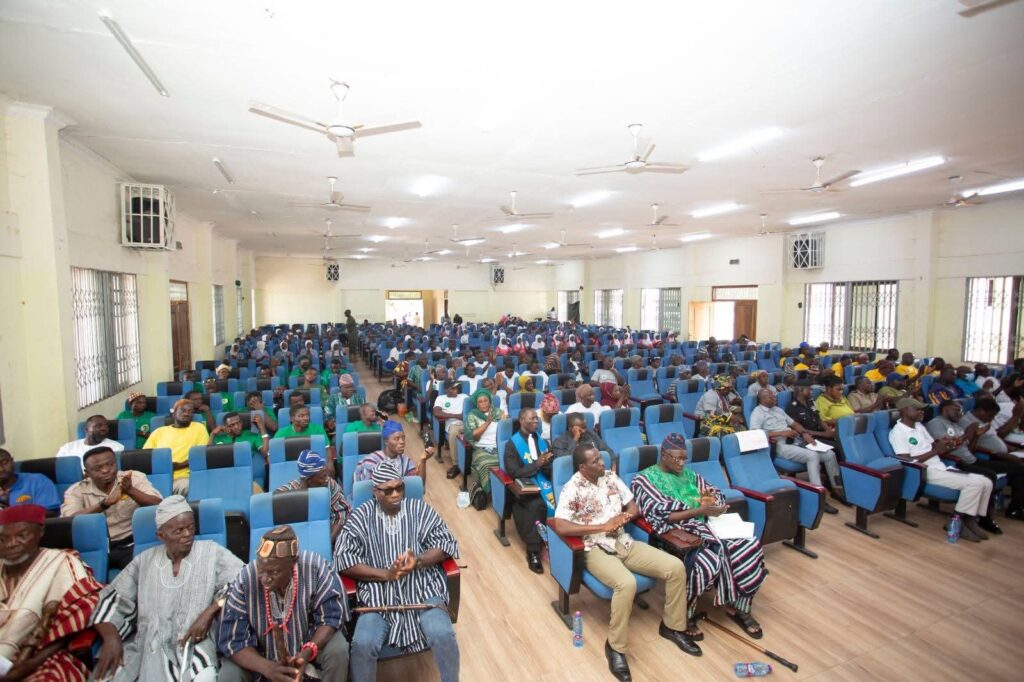
The event brought together government officials, traditional and religious leaders, security personnel, students, community representatives and conservation partners, highlighting a growing commitment to community-led environmental protection within the Mole ecological landscape.
The CREMA initiative is expected to strengthen wildlife conservation efforts while promoting sustainable development and improved livelihoods for communities living around Mole National Park in the Savannah Region.
Source: nkilgifm.com
